
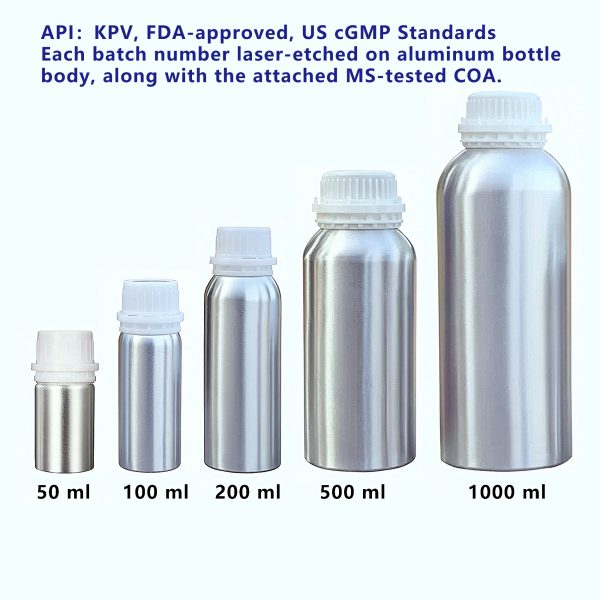
α-MSH:Lys-Pro-Val KPV

α-MSH:Lys-Pro-Val KPV

成分百科 / Peptide Encyclopedia

什么是α-MSH(三个氨基酸片段):Lys-Pro-Val?What Is KPV?

KPV is a tripeptide — just three amino acids long — that punches well above its molecular weight when it comes to inflammation control. It's derived from the C-terminal end of alpha-melanocyte-stimulating hormone (α-MSH), a naturally occurring peptide your body already produces, and it appears to inherit much of α-MSH's anti-inflammatory activity in a smaller, more targeted package.

The full name, Ac-KPV-NH2, tells you something important about how it's formulated: the "Ac" prefix means the lysine end is acetylated, and the "NH2" suffix means the valine end carries an amide group. These modifications protect the peptide from rapid enzymatic degradation — a common problem with short peptide sequences that would otherwise be chewed up before reaching their target.[1]

Right now, KPV sits firmly in preclinical territory. Every piece of evidence supporting its use comes from cell culture studies and animal models. There are no published human clinical trials. If you're reading this page because a clinic offered it to you, or because you're trying to understand what it does, that distinction matters enormously.

Key Takeaways
  • KPV is a three-amino-acid fragment of α-MSH that modulates inflammation through melanocortin receptor activation and NF-κB pathway suppression.
All clinical evidence is preclinical — cell and animal studies only. No human trials have been completed or registered.
  • KPV is not FDA-approved and has no legal commercial pathway in the US. It is classified as research-use only.
  • The acetylated, amide-capped form (Ac-KPV-NH2) has improved stability over unmodified KPV, but human pharmacokinetic data is absent.
  • Structural modification research is ongoing to improve KPV's oral bioavailability and resistance to enzymatic degradation.[1]
  • ClassSynthetic tripeptide (α-MSH fragment)
    Amino Acids3 (Lysine – Proline – Valine)
    MechanismMelanocortin receptor activation (MC1R, MC3R); NF-κB pathway modulation
    FDA StatusResearch Only — not FDA-approved
    AdministrationRoute not established in humans; practitioner-reported, not confirmed in published clinical trials
    Typical DoseNo validated human dose; preclinical ranges vary by model, practitioner-reported, not confirmed in published clinical trials
    Half-lifeNot established in humans; practitioner-reported, not confirmed in published clinical trials
    Primary Uses (Preclinical)Epithelial integrity, cytokine balance, immune-mediated stress responses
    Evidence LevelPreclinical / Research

    作用机制How Does KPV Work?

    The mechanism starts with α-MSH itself. Your pituitary and skin cells produce α-MSH as part of a broader hormonal system that regulates pigmentation, appetite, and inflammation. The full α-MSH molecule binds to a family of receptors called melanocortin receptors (MCRs), and researchers noticed decades ago that the C-terminal tripeptide — KPV — retained meaningful anti-inflammatory activity even when separated from the rest of the molecule.

    KPV appears to act primarily through MC1R and MC3R — two receptor subtypes found on immune cells, epithelial cells, and neurons. When these receptors are activated, they trigger downstream signaling that reduces the activity of NF-κB (nuclear factor kappa-light-chain-enhancer of activated B cells). NF-κB is essentially a master switch for inflammatory gene expression: when it's active, cells ramp up production of pro-inflammatory cytokines like TNF-α, IL-1β, and IL-6. KPV's ability to dampen NF-κB activity means it can, in preclinical models, reduce this cascade before it spirals.

    What makes this interesting from a pharmacological standpoint is the size. Most anti-inflammatory biologics are large, complex molecules. KPV is three amino acids. That small size opens the door — at least theoretically — to delivery routes that larger peptides can't use, including oral administration and topical application. The challenge, as with most short peptides, is stability: enzymatic degradation in the gut or bloodstream can destroy the molecule before it reaches its target. The Ac-KPV-NH2 formulation addresses this partially, and ongoing structural modification research is exploring glycoalkylation of the lysine residue as a way to extend stability further.[1]

    临床证据What the Clinical Evidence Actually Shows

    Here's the honest answer: the clinical evidence for KPV in humans doesn't exist yet. What does exist is a body of preclinical work suggesting the mechanism is real and the effects are reproducible in controlled laboratory conditions.

    Preclinical studies have examined KPV's effects in models of intestinal inflammation, skin inflammation, and immune-mediated tissue stress. The consistent finding is that KPV reduces pro-inflammatory cytokine production and helps preserve epithelial barrier function — the integrity of the cell layers that line your gut and skin. These are meaningful outcomes in the context of conditions like inflammatory bowel disease or wound healing, but translating them to humans requires clinical trials that haven't happened yet.

    The 2018 structural modification study published in PLOS ONE examined how glycoalkylation of KPV's lysine residue affects pharmacokinetics.[1] The goal was to address the core limitation of short peptides: they get degraded rapidly. That study represents the kind of foundational chemistry work that precedes drug development, not a clinical efficacy trial. It tells us researchers are actively working on making KPV more viable as a therapeutic candidate — not that it's ready for clinical use.

    Evidence level: preclinical only

    Every claim about KPV's effects comes from cell culture experiments or animal models. Preclinical results frequently fail to replicate in humans. Until randomized controlled trials in humans are completed, KPV's efficacy and safety profile in people remains genuinely unknown — not "promising but unproven," but actually unknown.

    What We Don't Know Yet

    • Human pharmacokinetics — Half-life, bioavailability, volume of distribution, and metabolic fate in humans have not been established. We don't know how much KPV reaches target tissues after any given administration route.
    • Effective human dose — Preclinical dose-response data cannot be reliably extrapolated to human dosing. No dose-ranging studies in humans exist.
    • Long-term safety — No human safety data of any duration exists. Animal studies have not flagged obvious toxicity signals, but that's a low bar.
    • Optimal delivery route — Whether oral, subcutaneous, topical, or another route produces the best outcomes in humans is entirely unresolved.
    • Head-to-head comparisons — KPV has not been compared to existing anti-inflammatory therapies in any human trial. Claims about superiority to approved treatments are not supported by evidence.
    • Disease-specific efficacy — Preclinical models of intestinal inflammation or skin inflammation are not the same as human IBD or eczema. Extrapolation should be treated with significant caution.

    剂量方案Typical Dosing — Practitioner & Community Ranges

    There are no published clinical trials establishing an official dose for KPV. The ranges below reflect what practitioners and researchers have reported in protocol guides and community consensus — not validated clinical data.

    Not clinical dosing data

    No randomized clinical trial has established a safe or effective dose of KPV in humans. The ranges sometimes cited in practitioner communities are not derived from human pharmacokinetic or efficacy studies. Dosing should be discussed directly with a licensed healthcare provider who is familiar with this compound's preclinical profile.

    Practitioner-reported protocols for KPV vary considerably depending on the intended application. Subcutaneous injection is the most commonly referenced route, with some protocols also describing oral or topical use for localized gut or skin applications — routes of administration for KPV have not been established in clinical studies or regulatory submissions; reported uses in research contexts are anecdotal and lack peer-reviewed validation. Reported subcutaneous doses range from approximately 500 mcg to 2 mg per day — routes of administration for KPV have not been established in clinical studies or regulatory submissions; reported uses in research contexts are anecdotal and lack peer-reviewed validation — though these figures are not traceable to published clinical trial data and should be treated as anecdotal ranges. Oral dosing protocols, when described, typically use higher nominal doses to account for anticipated degradation in the GI tract — routes of administration for KPV have not been established in clinical studies or regulatory submissions; reported uses in research contexts are anecdotal and lack peer-reviewed validation.

    The structural modification research underway — specifically glycoalkylation of the lysine residue — is aimed at improving oral bioavailability, which suggests the research community views oral delivery as a meaningful goal but not yet an achieved one.[1]

    If you're working with a provider on KPV, the honest conversation to have is: what preclinical data supports the dose they're proposing, and what monitoring is in place to catch unexpected effects?

    独特之处What Makes KPV Different

    The most interesting thing about KPV isn't what it does — it's how small it is and what that might eventually mean for delivery. Most anti-inflammatory peptides are large enough that oral administration is essentially impossible; they're destroyed in the gut before absorption. KPV's three-amino-acid structure makes oral and even topical delivery theoretically feasible in a way that larger peptides simply aren't.

    The size advantage — and its limits

    KPV's small molecular size is genuinely unusual for a peptide with meaningful receptor activity. Most therapeutically active peptides are 10, 20, or 40+ amino acids long. A three-amino-acid sequence that can activate melanocortin receptors and suppress NF-κB is pharmacologically interesting — but small size also means faster enzymatic degradation, which is exactly why the Ac-KPV-NH2 formulation and the glycoalkylation research exist.[1]

    The other distinguishing feature is its derivation from an endogenous molecule. α-MSH is something your body makes. KPV is a fragment of that natural sequence. That doesn't make it safe or effective at pharmacological doses — endogenous doesn't mean benign at any concentration — but it does suggest the receptor interactions are physiologically plausible rather than entirely synthetic.

    证据的局限What the Evidence Does Not Show

    This section matters more for KPV than for most peptides on this site, because the gap between what's claimed online and what the science actually supports is significant.

    • KPV has not been shown to treat any human disease. Not IBD, not Crohn's disease, not eczema, not any specific condition. Preclinical models are not the same as human disease.
    • No human safety data exists. The absence of reported toxicity in animal studies is not equivalent to a human safety profile.
    • Bioavailability in humans is unknown. Claims about oral KPV "reaching the gut lining" or subcutaneous KPV "reaching inflamed tissue" are not supported by published human pharmacokinetic data.
    • No comparison to approved therapies has been made in humans. KPV cannot be said to be superior, equivalent, or inferior to mesalamine, biologics, or any other approved anti-inflammatory treatment.
    • The structural modification research is chemistry work, not efficacy work. The 2018 PLOS ONE study[1] examined how to modify KPV's structure to improve stability — it did not demonstrate clinical efficacy of those modified forms.

    法规与获取状态Regulatory & Access Status

    Access status as of 2026-03

    KPV is not FDA-approved for any indication. It is classified as research-use only. There is no legal commercial pathway for KPV as a pharmaceutical product in the United States. It is not available through licensed compounding pharmacies as an approved bulk drug substance under current FDA guidance. Any KPV sold for human use exists in a legal and quality-control gray area that carries meaningful risk.

    The FDA's research-only classification means exactly what it sounds like: KPV can be used in laboratory and preclinical research settings, but it has not cleared the regulatory pathway that would allow it to be prescribed, compounded, or sold for human therapeutic use. If a clinic is offering KPV as a treatment, that clinic is operating outside established regulatory boundaries — which doesn't automatically mean the compound is dangerous, but it does mean there's no regulatory oversight of the product's purity, potency, or sterility.

    Patients and providers should consult FDA.gov and the FDA's MedWatch program for current enforcement activity related to unapproved peptide products.

    获取渠道Sourcing & Safety

    If you're going to obtain KPV regardless of its regulatory status, here's what actually matters for your safety.

    What to look for:

    • Third-party Certificate of Analysis (COA) — The lab testing the product should be independent of the vendor. In-house testing is not independent verification.
    • HPLC purity report — For a three-amino-acid peptide, expect ≥98% purity from a reputable source. Lower purity means unknown contaminants.
    • Mass spectrometry confirmation — Confirms the peptide is actually KPV and not a cheaper substitute or degradation product.
    • Sterility testing — For any injectable product, sterility certification is non-negotiable. This is where gray-market peptides most commonly fail.

    Red flags:

    • No COA or vendor-only testing — The most common sign of a low-quality supplier. Walk away.
    • Price significantly below market — Peptide synthesis and independent testing cost money. Unusually cheap product usually reflects skipped steps.
    • No clear storage instructions — KPV, like most peptides, requires proper cold-chain handling. A vendor that doesn't specify storage conditions probably isn't handling it correctly.
    • Claims of FDA approval or "pharmaceutical grade" without documentation — Neither claim is verifiable for KPV given its regulatory status. Treat them as red flags, not reassurances.

    相关肽与对比Related Peptides & Comparisons

    If you're interested in KPV for its anti-inflammatory and gut-protective properties, BPC-157 is the most commonly discussed alternative — it has a larger preclinical evidence base and more documented practitioner experience, though it shares KPV's lack of completed human clinical trials. For immune modulation through melanocortin pathways specifically, PT-141 (bremelanotide) represents the most clinically advanced melanocortin-targeting peptide, though its approved indication is sexual dysfunction rather than inflammation.

    Thymosin Beta-4 (TB-500) is another peptide researched for epithelial integrity and tissue repair, with a partially overlapping preclinical profile. None of these compounds have head-to-head comparison data with KPV in humans.

    常见问题FAQ

    What is KPV used for

    In preclinical research, KPV has been studied for its potential to reduce inflammation, support epithelial barrier integrity (particularly in gut and skin tissue), and modulate cytokine production. No human clinical use has been validated. Any therapeutic application in humans is off-label, unregulated, and not supported by clinical trial evidence.

    Is KPV the same as BPC-157

    No. BPC-157 is a 15-amino-acid peptide derived from a gastric protein, with a different mechanism of action and a separate (also largely preclinical) evidence base. KPV is a three-amino-acid α-MSH fragment that works through melanocortin receptors and NF-κB modulation. They're both studied for tissue repair and anti-inflammatory effects, but they're structurally and mechanistically distinct compounds.

    Can KPV be taken orally

    Theoretically, KPV's small size makes oral delivery more feasible than for larger peptides, and this is an active area of research — particularly the structural modification work aimed at improving oral bioavailability.[1] In practice, whether oral KPV survives GI degradation and reaches target tissue at meaningful concentrations in humans has not been established. Claims that oral KPV effectively treats gut inflammation are not supported by published human data.

    How does KPV compare to α-MSH

    α-MSH is the full 13-amino-acid parent peptide from which KPV is derived. KPV retains the C-terminal tripeptide sequence (positions 11-13) responsible for much of α-MSH's anti-inflammatory activity. The advantage of KPV over full-length α-MSH is its smaller size and simpler synthesis — but α-MSH also has additional biological activities (including melanogenesis and appetite regulation) that KPV may not fully replicate. Neither compound is FDA-approved for therapeutic use.

    Is KPV legal to buy in the US

    KPV is classified as research-use only by the FDA. It is not approved for human therapeutic use and cannot be legally prescribed or compounded for patients under current US regulatory frameworks. It can be purchased for laboratory research purposes, but products sold for human use exist in a regulatory gray area with no quality oversight.

    参考文献References

    展开 1 条文献来源
    1. Dukh M, et al. "Structural modification of the tripeptide KPV by reductive 'glycoalkylation' of the lysine residue." PLOS ONE. 2018. PMID: 29953505

    以上正文为英文原文(源自公开资料整理),本站未作翻译,仅供研究参考,不构成医疗建议。

    作用与功效

    作用机制与靶点

    α-MSH 的 C 端极简片段 / α-MSH 的 C 端极简片段(Lys-Pro-Val):经 MC1R/黑皮质素通路抑制 NF-κB 与促炎细胞因子,兼具抗炎、抗菌与促创面上皮化作用,且不抑制正常免疫功能

    功效说明

    • 创伤修复,• 炎症疾病

    具有极致的全身及局部抗炎与抗菌能力。有效治疗炎症性肠病 (IBD)、牛皮癣、湿疹,加速创口愈合且不抑制正常免疫系统。

    英文简介 / Overview (EN)

    KPV is a tripeptide — just three amino acids long — that punches well above its molecular weight when it comes to inflammation control. It's derived from the C-terminal end of alpha-melanocyte-stimulating hormone (α-MSH), a naturally occurring peptide your body already produces, and it appears to inherit much of α-MSH's anti-inflammatory activity in a smaller, more targeted package.

    The full name, Ac-KPV-NH2, tells you something important about how it's formulated: the "Ac" prefix means the lysine end is acetylated, and the "NH2" suffix means the valine end carries an amide group. These modifications protect the peptide from rapid enzymatic degradation — a common problem with short peptide sequences that would otherwise be chewed up before reaching their target.[1]

    Right now, KPV sits firmly in preclinical territory. Every piece of evidence supporting its use comes from cell culture studies and animal models. There are no published human clinical trials. If you're reading this page because a clinic offered it to you, or because you're trying to understand what it does, that distinction matters enormously.

    作用机制(英文)/ Mechanism (EN)

    Melanocortin receptor activation (MC1R, MC3R); NF-κB pathway modulation

    The mechanism starts with α-MSH itself. Your pituitary and skin cells produce α-MSH as part of a broader hormonal system that regulates pigmentation, appetite, and inflammation. The full α-MSH molecule binds to a family of receptors called melanocortin receptors (MCRs), and researchers noticed decades ago that the C-terminal tripeptide — KPV — retained meaningful anti-inflammatory activity even when separated from the rest of the molecule.

    KPV appears to act primarily through MC1R and MC3R — two receptor subtypes found on immune cells, epithelial cells, and neurons. When these receptors are activated, they trigger downstream signaling that reduces the activity of NF-κB (nuclear factor kappa-light-chain-enhancer of activated B cells). NF-κB is essentially a master switch for inflammatory gene expression: when it's active, cells ramp up production of pro-inflammatory cytokines like TNF-α, IL-1β, and IL-6. KPV's ability to dampen NF-κB activity means it can, in preclinical models, reduce this cascade before it spirals.

    What makes this interesting from a pharmacological standpoint is the size. Most anti-inflammatory biologics are large, complex molecules. KPV is three amino acids. That small size opens the door — at least theoretically — to delivery routes that larger peptides can't use, including oral administration and topical application. The challenge, as with most short peptides, is stability: enzymatic degradation in the gut or bloodstream can destroy the molecule before it reaches its target. The Ac-KPV-NH2 formulation addresses this partially, and ongoing structural modification research is exploring glycoalkylation of the lysine residue as a way to extend stability further.[1]

    临床证据与安全性(英文)/ Clinical Evidence (EN)

    Here's the honest answer: the clinical evidence for KPV in humans doesn't exist yet. What does exist is a body of preclinical work suggesting the mechanism is real and the effects are reproducible in controlled laboratory conditions.

    Preclinical studies have examined KPV's effects in models of intestinal inflammation, skin inflammation, and immune-mediated tissue stress. The consistent finding is that KPV reduces pro-inflammatory cytokine production and helps preserve epithelial barrier function — the integrity of the cell layers that line your gut and skin. These are meaningful outcomes in the context of conditions like inflammatory bowel disease or wound healing, but translating them to humans requires clinical trials that haven't happened yet.

    The 2018 structural modification study published in PLOS ONE examined how glycoalkylation of KPV's lysine residue affects pharmacokinetics.[1] The goal was to address the core limitation of short peptides: they get degraded rapidly. That study represents the kind of foundational chemistry work that precedes drug development, not a clinical efficacy trial. It tells us researchers are actively working on making KPV more viable as a therapeutic candidate — not that it's ready for clinical use.

    Every claim about KPV's effects comes from cell culture experiments or animal models. Preclinical results frequently fail to replicate in humans. Until randomized controlled trials in humans are completed, KPV's efficacy and safety profile in people remains genuinely unknown — not "promising but unproven," but actually unknown.

    • 创伤修复,• 炎症疾病

    具有极致的全身及局部抗炎与抗菌能力。有效治疗炎症性肠病 (IBD)、牛皮癣、湿疹,加速创口愈合且不抑制正常免疫系统。

    登录

    注册

    重设密码

    请输入您的用户名或电子邮箱地址。您会收到一封包含创建新密码链接的电子邮件。